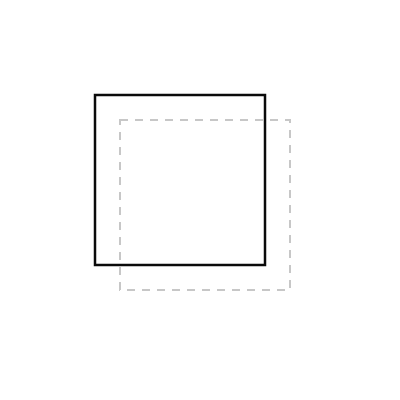
Half the briefs that reach us open with the word rebrand. Maybe a third of those projects end up being one. That is not because founders are wrong about their problem; it is because rebrand has become the word for "something about the brand feels off and I want it fixed." The job of a first call is to find out what the something is.
What a refresh solves
A refresh keeps the identity and upgrades its execution. Same name, same mark or a lightly redrawn one, same story, but better type, tighter colour discipline, photography with a point of view, and a site that finally does the brand justice. A refresh is the answer when people recognise you, buy from you and say good things about you, yet the materials feel five years older than the product.
Signals you need a refresh, not a rebrand:
- Customers describe you accurately. The brand in their head matches the brand you want.
- The logo is fine at a glance but the touchpoints are inconsistent: the site, the packaging and the Instagram grid look like three different companies.
- Sales are steady and the complaint is aesthetic, not strategic.
What a rebrand solves
A rebrand changes what the brand means, and usually what it says and to whom. It is surgery, not styling. You do it when the business has outgrown the story: the name blocks a market you need, the positioning attracts the wrong customer, or the thing you sell has fundamentally changed since the identity was made.
A refresh makes people feel the way they already feel about you, more strongly. A rebrand changes what they feel.
Signals the problem really is the brand:
- You keep winning price-shoppers and losing the customers you actually want.
- The team is embarrassed to send the deck, the site or the packaging, and works around them.
- You explain the name apologetically, or the name legally or linguistically fails in a market that matters.
The expensive mistake in the middle
The costly move is buying the wrong one. A rebrand where a refresh was needed burns recognition the business spent years earning; regulars walk past the new packaging in the shop. A refresh where a rebrand was needed is lipstick on a positioning problem, and eighteen months later you pay for the project twice.
Our diagnostic is unglamorous: we ask what customers say about you unprompted, and we compare it with what you wish they said. If the two match, we make the materials worthy of the reputation. If they do not, no amount of new typography will close that gap, and we talk strategy before we open a design tool.
Either way, ask for the small version first. A studio that reaches for the full rebrand before diagnosing the gap is selling you their favourite project, not your missing piece.